HUMAN BEHAVIOUR — OFF
Made by Tyler
WELCOME TO

“FROM PLATE TO POLICY”

Before you enter, a quick clarification: this project isn’t here to attack any specific law, industry, or person. It’s a civic exploration about animal rights—and why the way we treat animals connects to the kind of society we build for humans, too.

We’re here to encourage accountability—and to imagine a future where stronger animal‑protection laws can win more rights for animals.

From plate to policy

You enjoy the meal.
But who paid the price?

Click the plate to follow what’s usually hidden: how a “normal” choice becomes a system.

Click the plate to begin. Your cursor is a question.
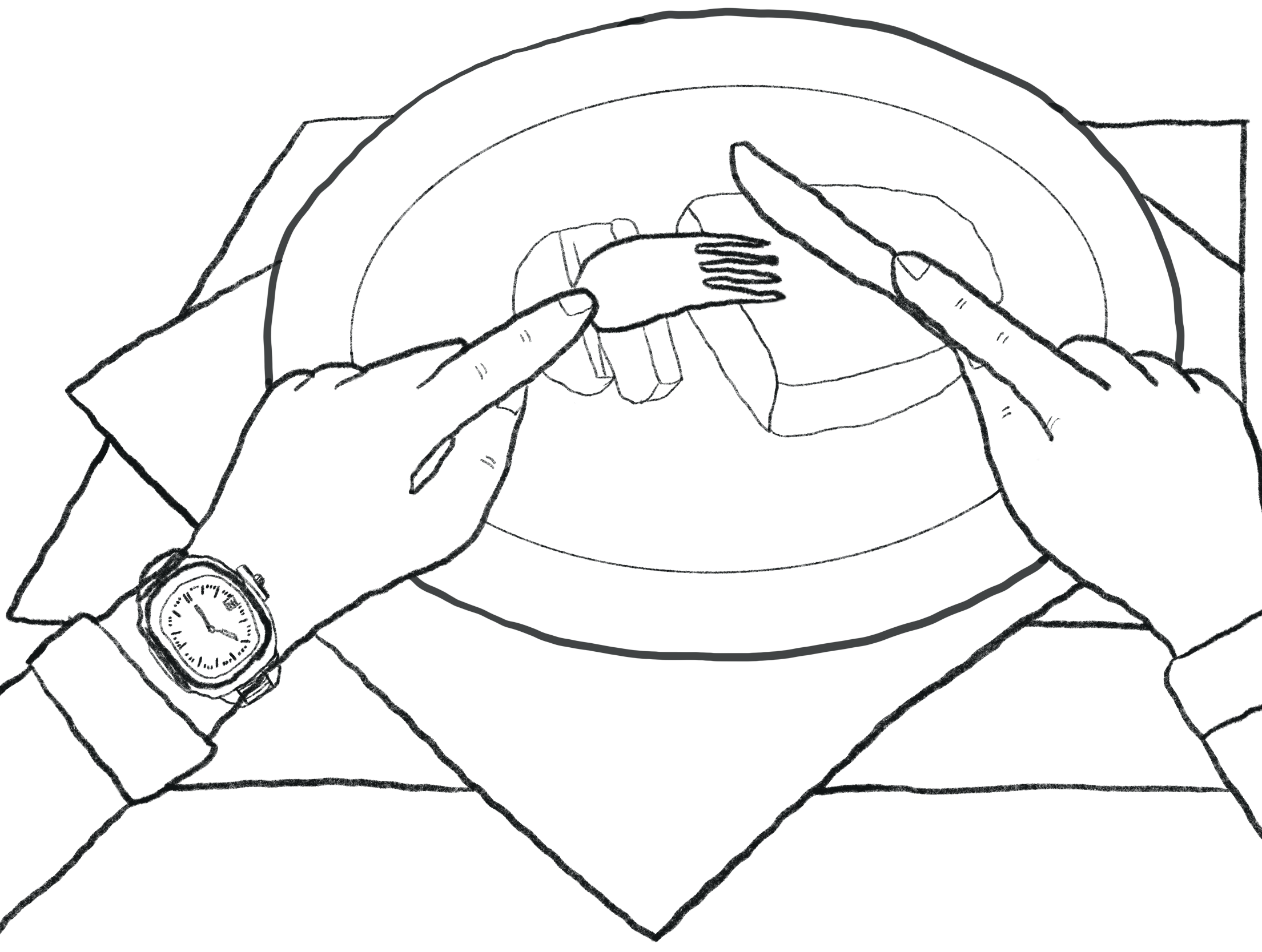
Hands cutting meat (line art).
CLICK THE PLATE →

ETHICAL (What we expect)

Minimum dignity, real oversight, and transparency — the kind of system people assume they’re supporting.

Hover the belt icons.
Living conditions
Animals can stand, turn, and move normally. Confinement is limited and welfare is measurable.
CIVIC QUESTION: Who defines “acceptable” — law, industry codes, or citizens?
Care & Health
Humane handling, appropriate veterinary care, and fewer painful “efficiency” procedures.
CIVIC QUESTION: If harm is profitable, what forces it to stop — rules, enforcement, or public pressure?
Transparency
Clear standards, inspections, and the ability to report harm without being punished for speaking.
CIVIC QUESTION: Should exposing abuse be protected — or restricted?
Testing alternatives
Cruelty-free methods are encouraged, especially for non-essential products, where alternatives exist.
CIVIC QUESTION: When science advances, why does policy sometimes lag behind?
Transport & slaughter
Welfare doesn’t end at the farm gate. Standards apply across transport, processing, and oversight.
CIVIC QUESTION: Who is responsible when harm happens “in transit”?
Consumer information
Labels and claims are meaningful only when they’re backed by enforceable standards and checks.
CIVIC QUESTION: What does “humane” legally require — and what is just marketing?
Chicken: welfare is not a “nice-to-have.”
Cow: “units” become lives when you look closer.
Sheep: closed doors create blind spots.
Chicken: welfare is not a “nice-to-have.”
Cow: “units” become lives when you look closer.
Sheep: closed doors create blind spots.
CALL TO ACTION

Do one thing. Make it real.

No speeches. No guilt. Just one action you can keep.

1) One swap this week
Pick one change. Keep it small enough to actually repeat.
  • One plant‑based meal.
  • Choose cruelty‑free / non‑tested products.
  • When possible, choose higher‑welfare options.
2) Use your voice
Copy one sentence. Send it to a school leader, local representative, or a company.
“Please support stronger animal welfare standards and transparency in our food system.”
3) Share the PSA
One share is enough. Let the message travel further than you can.
Companies I don’t support: JBS, Air France.
You don’t need to fix everything. Just make the “normal” a little harder to ignore.

MAXIMIZING YOUR PROFIT (When no one sees)

When incentives reward output and hide consequences, harm becomes “normal.” Click a card to reveal the civic question.

Each click reveals a question.
Crowding Efficiency
High-density confinement turns living beings into units. Welfare becomes optional.
Click to reveal civic question.
Pain as cost-control Incentives
Suffering is justified as “industry practice” when it increases output or reduces cost.
Click to reveal civic question.
Closed doors Transparency
When access is restricted, accountability collapses. What is hidden is easier to ignore.
Click to reveal civic question.
Self-regulation Codes vs Law
Voluntary codes can help, but without legal force, compliance can be selective and uneven.
Click to reveal civic question.
Externalized harm Costs
The system shifts moral and social costs away from profit and onto those with less power.
Click to reveal civic question.
Marketing vs truth Public
Labels and images can create “ethical comfort” without changing the underlying system.
Click to reveal civic question.

ALTER (If roles were reversed)

Same structure. Different species. The logic doesn’t change—only who it protects.

You are inventory Label
A number replaces your name. Your value is measured in output.
“Your pain is paperwork.”
You are contained Cage
Space is rationed. Movement is a privilege.
“Efficiency decides your world.”
You are transported Belt
You move on a schedule—delivery first, dignity second.
“The line never stops.”
You are replaceable Unit
If you fail, another takes your place. The system continues.
“Who is the system built for?”
You can’t testify Power
Your rights depend on what the public chooses to notice.
“Who speaks for those without a vote?”
You become “normal” Culture
At some point, the system stops shocking. That’s the warning.
“When did you stop asking why?”

Animal rights don’t need permission.
They need consideration.
Because “less important” isn’t the same as “doesn’t matter.”

ACT (Realistic action plan)

Choose one action from each column. Small choices + public pressure + policy = measurable change.

Copy + send the template.
Individual Today
• Choose cruelty-free products and verified humane options.
• Reduce demand for factory-farmed products when possible.
• Share this project and ask: “Should this be normal?”
Goal: turn awareness into habits.
Group This week
• Support SPCA / Humane groups (events, petitions, volunteering).
• Create a school QR poster: “From plate to policy.”
• Host a 10-minute lunchtime discussion on transparency.
Goal: build public support locally.
Political system This month
• Email your MP/MPP about enforceable welfare standards.
• Support transparency + whistleblower protections.
• Ask: “Are standards voluntary or legally binding?”
Goal: convert pressure into policy.
Message template Copy
Subject: Stronger animal welfare standards & transparency

Hello,
I’m a student in our community, and I’m concerned about animal welfare in factory farming and the importance of transparency and enforcement. I support stronger, legally enforceable welfare standards (not only voluntary codes), and policies that protect accountability and reporting. Please share what actions you are taking to improve enforcement and transparency, and what legislation you support to strengthen animal welfare protections in our province/Canada.

Thank you.
Tip: keep it respectful, specific, and focused on accountability.